Tuesday, October 4, 2011

DAVID BATE _ key concepts - documentary

As with my pregnancy photos, I looked again at David Bates’ book ‘The key concepts - photography’, this time at what he had to say about documentary photos.


The story-telling in photographs became popular in the early 20th century (1920-1930s). These photos, says Bates, ‘aimed to show in an informal way, the everyday lives of ordinary people to other ordinary people’. This was about life itself. In the mid 1930s magazines about people’s lives bacame pooular - such as ‘Life’ in the US and ‘Picture Post ‘ in Britain. Documentary photos were accompanied by stories of people’s lives. They also showed a lot more expression on people’s faces such as smiling, laughing and anger. The aim quite often was to educate and enlighten in a creative photographic way. Photojournalism came into being and social documentaries along with it. When the camera is clicked a microsecond of a scene is recorded. It is not exactly what is occuring but hopefully it sums ip historically the essence of the situation.


What the photojournalist decides to include (or exclude) in their photo can be said to stage reality. It is an interpretation which can be profound. Then the question arises as to whether the interpretation is true or false. Bate goes on to say that the photographer should be telling the truth as an eyewittness. But then eyewittness can can tell different stories about the same scene.


Monday, September 19, 2011

JENNIFER LOOMIS - PHOTOGRAPHER

Jennifer Loomis - photographer

Jennifer Loomis is a fine art photographer in the subject of pregnant women. She has written a book called ‘Portraits of pregnancy’.

Loomis’ background is as an international photojournalist working in some of the most difficult war-torn places in the world such as Rwanda where she covered the aftermath of the genocide there. In an interview with Kuow, she spoke in detail about how terrible it was seeing all the people suffer. That was in the late 1990s.

Going back to the early 1990s Lomas used to photograph naked women as more of a hobby and an escape from her photojournalism job. One day a pregnant friend came to her and asked to be photographed. She had never seen a pregnant body and was amazed with the beautiful curves. This first encounter with a pregnant belly transfixed her. She went back to her photojournalistic job and mentioned to her photographer friends that she might switch to pregnant women for which there was no genre in those days. They talked her out of it saying that she would never earn a living.

Then after being in Ruanda she decided to give the maternity photography a go. She says that with her background she can bring the larger story to a single image – even in pregnant women. At that time Annie Leibowitz was being asked to continually take pregnancy photographs as an aftermath of the Demi Moore shot. She passed all these women onto Loomis.

Loomis finds the shape of the belly unique and loves the way light falls on it. She would ask herself ‘where is this shape in the galleries’? This beautiful shape really had not been seen in the art world and she felt that she wanted to document it.

Loomis considers pregnant women her art form. She brings emotion and narrative to her photographs. Interestingly when she decided to market herself she placed an ad in a maternity magazine but was rung by the magazine whose publishers said that they couldn’t publish that type of photograph. It was far too risqué. This was only 10 years ago. She was shocked. She changed the image to one in which the model was more covered up and still is very careful when using her images in magazines.

Loomis’ book ‘Portraits of pregnancy’ documents 50 women. Quotations and stories, told by Hugo Kugiya , accompany the images. Loomis works in Seattle.


References http://www.kuow.org/mp3high/mp3/KUOWPresents/20091003JenniferLoomis.mp3 (radio interview)

http://berkelouw.com.au/catalogue/books/9781591810827/portraits-of-pregnancy-the-birth-of-a-mother

http://www.jenniferloomis.com/

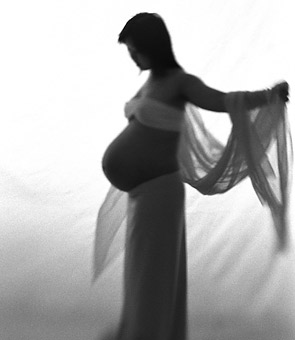
Robert Austin Fitch - glamour maternity photographer

Robert Austin Fitch - Glamour Maternity Photography

One maternity photographer that I like is Robert Austin Fitch, a New York photographer. He talks about capturing the magic and the love. He takes a portable studio to the client’s home. He generally back lights his subject; he has his models semi-naked; he sometimes used soft white flowing material props to make the image softer and more romantic. He calls himself a fine art photographer.

References:

http://en.wikipedia.org/wiki/Glamour_photography#Popular_portraiture

http://www.robfitch.com/

Sunday, September 18, 2011

My photo-documentary style

In September 2010 we had an exercise with Belinda to do some photojournalism photos at home. I quite liked these & plan to do this sort of image. I would like to get more of the room in but I had to straighten these a lot & so lost the sides in so doing.

This room has lots of natural light but I still used 1600ISO with 1.80 & f2.8. This means that I shall definitely have to have quite a bit of lighting.

Saturday, September 17, 2011

BETH YARNELLE EDWARDS - photographer

Beth Yarnelle Edwards - Photographer

Beth Yarnelle Edwards is a San Francisco based photographer who likes to photograph people in their natural environment. She re-creates scenes of their daily life. She has done this in the US as well as Europe.

References:
http://www.bethyarnelleedwards.com/#a=0&at=0&mi=1&pt=0&pi=2&s=1&p=-1


JAN STEEN - painter


Jan Steen - Artist
Jan Steen was a 17th century Dutch artist who depicted families in chaos. He gives a great insight to family life at that time. He is able to show the energy between the family members. His subjects are active and often merry. He was one of the masters at that time. He was brilliant.


References:

Friday, September 16, 2011

JULIE BLACKMORE - Photographer

Julie Blackmore - photographer

I found these interesting shots taken by Julie Blackmore of family situations. Well actually they are composites. Blackmore sees the family scene almost in a comical way. She has placed little people in beautiful homes where they make the idealised family life. They have a dream-like feel about them. This is very different to Crewdson (whom I researched last semester) in that his are more grimy.

Blackmore comes from a large family and has many nieces & nephews aho she uses in her photographs along with her own children. She does well commercially with many big clients.

Although these are not the sort of images I want from my same sex families, I quite like the sparseness of the room set-up and the little children in the big grand spaces.


References;
http://blog.janstaller.net/2010/09/30/julie-blackmon-at-robert-mann-gallery/